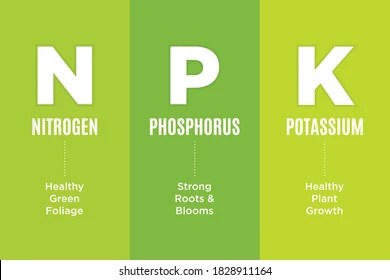
Plants are like people, they need nutrients. Most gardeners look to fertilizer to give their plants nutrients. If humans are lacking a certain nutrient then they start to show symptoms, such as lacking iron leading to exhaustion – plants will also show symptoms if they need nutrients. There are dozens of nutrients that plants need, but the big ones are Nitrogen – N, Phosphorous – P, and Potassium – K.
When you go to the garden center and look for fertilizer/plant food, they will list 3 numbers on the front, i.e. 1-3-2, which means 1% Nitrogen, 3% Phosphorous, and 2% Potassium. The absolute best way to know what your plants need is to do a soil test. In Utah, you can use the Utah State University Extension office to do a soil test, which will tell you the N-P-K levels in your soil and if you need to add an amendment of compost.
If you’re not ready to do the soil test, here are symptoms of deficient nutrients that’ll help you choose the right fertilizer/plant food.
Nitrogen Deficiency: A lack of N means a lack of chlorophyll content in plants, and chlorophyll gives vegetation its vibrant green color. This is why nitrogen deficiency at early stages reveals in lighter greens. Then, a nitrogen deficiency causes green leaves to turn yellow, starting from older ones that fade prematurely. Source
Phosphorous Deficiency: Phosphorus deficiency tends to inhibit or prevent shoot growth. Leaves turn dark, dull, blue-green, and may become pale in severe deficiency. Reddish, reddish-violet, or violet color develops from increased anthocyanin synthesis. Symptoms appear first on older parts of the plant. Source
Potassium Deficiency: Potassium-deficient plants are easily distinguished by their tendency to wilt on dry, sunny days. The overall appearance of the plant is wilted or drooping. Deficient plants will have a stocky appearance with short internodes. Younger leaves’ growth is inhibited, and they have small leaf blades. Leaves may also be dark to bluish-green, have a bronze metallic shine, or have a wavy appearance. In some species, older leaves show blotchy chlorosis. In monocots such as maize, leaves may have inverted V-shaped chlorosis. Source
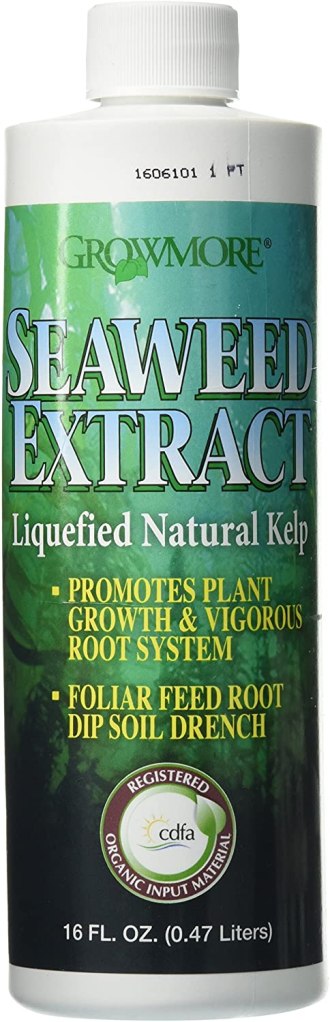
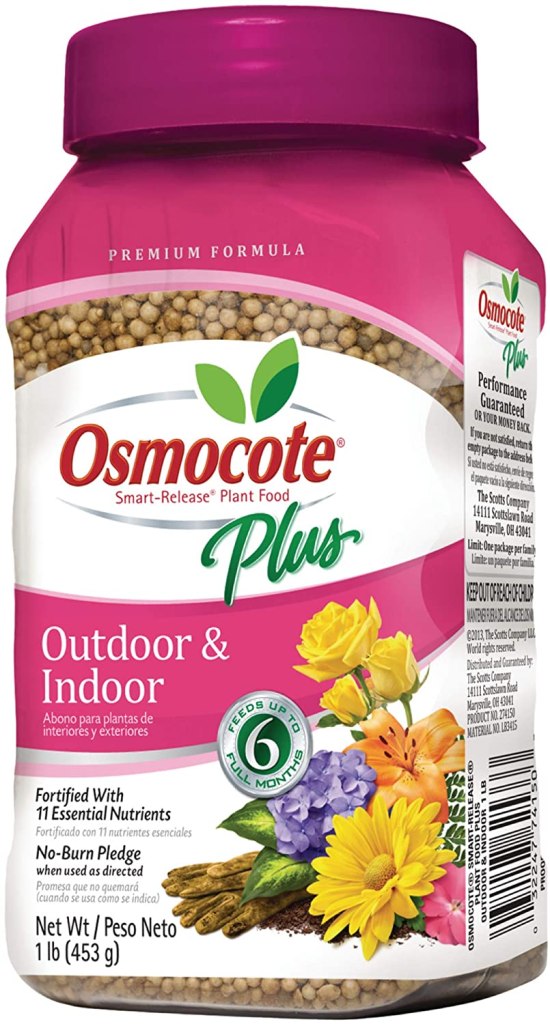
I like to try and do organic gardening, so my go-to fertilizer/plant food is GrowMore: Seaweed Extract, and its NPK numbers are .1 – 0 – .4, which are very low and work well when you amend with other natural sources like compost, which you can also buy at the garden center in a bag. Another commonly used fertilizer that is not organic is Osmocot. Osmocote Plus has a 15-9-12 analysis, feeds both in-ground and container plants for 6 months, and contains micronutrients; Osmocote Flower and Vegetable has a 14-14-14 analysis and feeds in-ground fruits and vegetables for 4 months. (source)

 Fun Size Paradise