Here in Utah, we walk a pretty funny line between needing the snow for water and getting so sick of the snow in the spring. Especially when we’ve been teased with a week or two of delightfully sunny weather and then BAM, snowstorm. Usually, it hits right after you’ve planted your garden, am I right?
What do you do for your heat-loving plants when it snows?
As a gardener, you’ll probably find yourself obsessed with watching the weather forecast and being aware of your (tentative) frost dates. First and foremost, I would suggest that you plug your zip code into the USDA Plant Hardiness Zone Map.
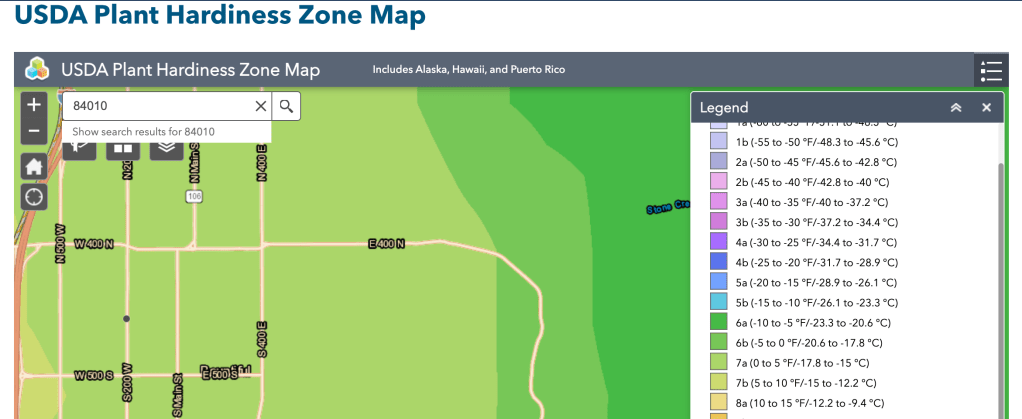
Based on my zip code, you can see that my city is different shades of green. Based on the legend, my zone is between 6a-7a. I know from experience in my yard that my microclimate is a bit cooler based on my elevation, so I garden using zone 6 guidelines. Zone 6 temperatures can get to 0 degrees, so when I buy and plant perennials (plants that come back every year), I always check out the tag to make sure they are hardy to Zone 6. If you are aware that your perennials are zoned correctly, then you don’t need to worry about those ones in the winter or when you get a late spring frost.
The exception to this is fruit trees, vegetable gardens, and annual flowers. Fruit trees are very sensitive in the spring, they love the heat and hate the cold. If they warm up and start to blossom and then it snows, all those blossoms (that create your fruit) will die. This means you will have little to no fruit if you don’t have a plan for the spring. If you look at this Critical Temperature for Frost Damage on Fruit Trees chart by USU Extension, you can quickly glance at your trees and use the photos to identify what stage they’re in. The horizontal axis which states 10% and 90% represents fruit production loss for the temperatures listed beneath each stage with only 30 minutes of exposure.
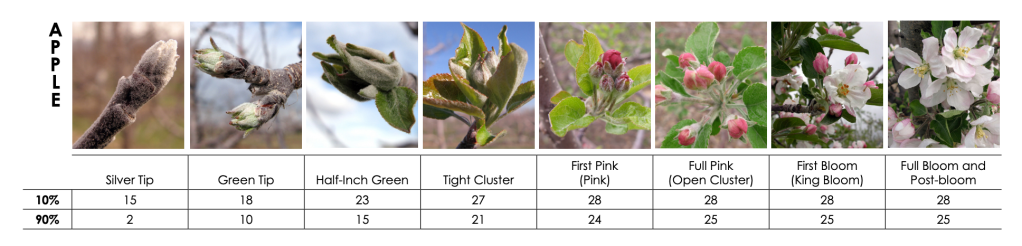
For example, my apple tree is at the half-inch green phase and so I can see that at 23 degrees I will lose 10% of my fruit production and at 15 degrees I will lose 90% of my fruit production. Now, one thing to note is that fruit trees do need to be thinned, so many gardeners consider a 10% loss of fruit production to be a natural thinning.
If you do need to cover your tree, the goal is to create a little greenhouse for it. People use blankets, tarps, tree jackets, or frost cloths to cover their trees and then add a heat source by wrapping incandescent Christmas lights around the trunk, now a days you can grab solar ones on amazon. Here’s a video explanation of this method.
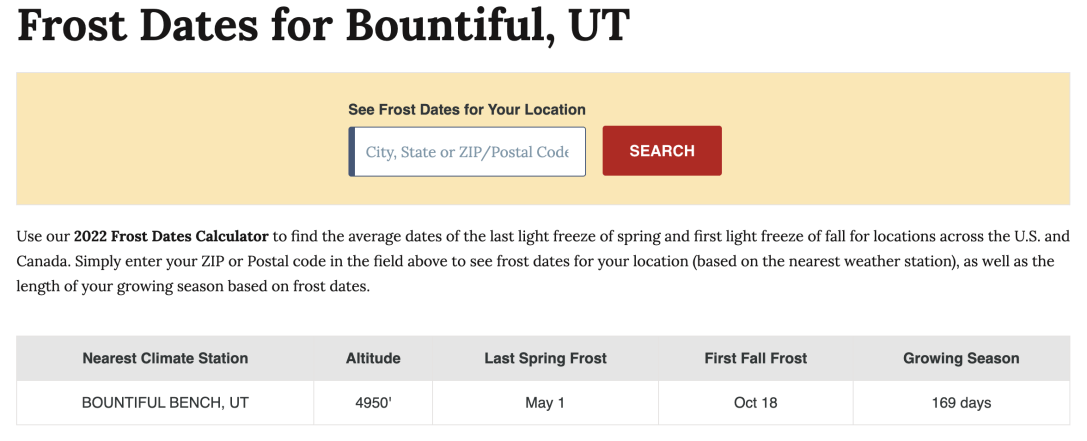
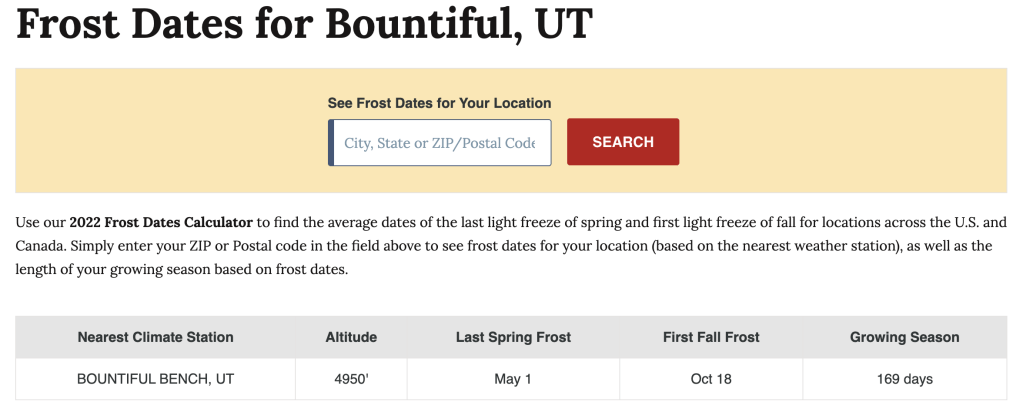
Lastly, let’s talk about your vegetables and annual flowers. The best advice is to use alamanc.com, plug in your zip code, and see your frost dates.
Go enjoy your garden!
Miki

 Fun Size Paradise
[…] you’re approaching your planting date (you can learn more about that here), you’ll want to harden off your seedlings. This means that you bring them outside for a few […]
LikeLike